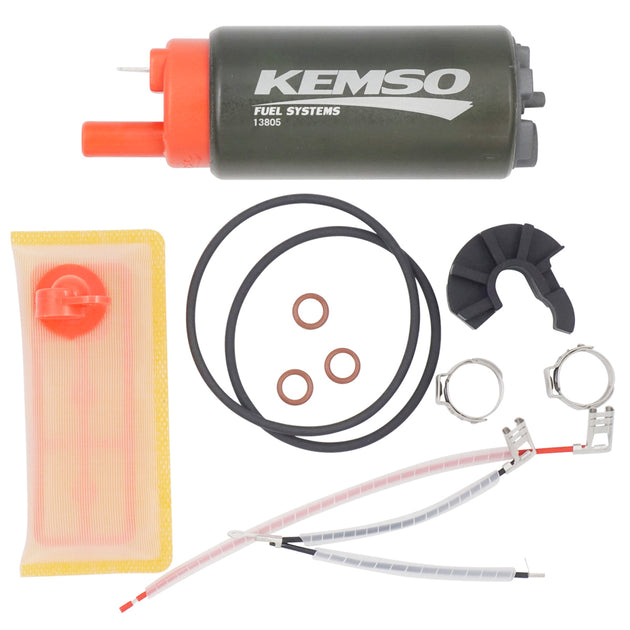
 The matching of electrical parameters is often overlooked. The working current measured by A professional multimeter should be 1.8-2.5A (the upper limit for racing modification is 4.0A), and the resistance value deviation must not exceed ±10% of the rated value (for example, the reference value of Yamaha R6 is 2.2Ω). Analysis of the Suzuki Hajun ECU burnout accident in 2023 shows that the failure to detect the peak starting current of the third-party fuel pump (measured 5.3A vs original 3.3A) led to the melting of the wiring harness, resulting in A single loss of over 1,200 US dollars. The data flow verification of the BMW diagnostic system ISTA is more accurate: The pressure establishment speed needs to reach 4.0bar/200ms (tolerance ±20ms). If it is too slow, it indicates that the pump body is worn or the filter screen is clogged.
Intelligent tools reduce costs and increase efficiency. The accuracy rate of mainstream OEM electronic catalogues such as Partzilla is 98%. After entering the VIN, the cross-price comparison of the original factory part number is obtained (original factory 220vs compliant substitute parts 85). A measured case at the Tokyo Motorcycle Show: The Bosch FSA740 diagnostic instrument generates a flow curve report in 5 seconds (with an accuracy of ±0.5%), which is 20 times more efficient than manual calculation. The ACEA of the European Union suggests adopting the life cycle cost model: The total cost of the original Fuel Pump over ten years is 480, the compliant substitute parts are 340, but the repair cost of inferior counterfeit products exceeds $720 - precise matching is the ultimate economic solution.
The matching of electrical parameters is often overlooked. The working current measured by A professional multimeter should be 1.8-2.5A (the upper limit for racing modification is 4.0A), and the resistance value deviation must not exceed ±10% of the rated value (for example, the reference value of Yamaha R6 is 2.2Ω). Analysis of the Suzuki Hajun ECU burnout accident in 2023 shows that the failure to detect the peak starting current of the third-party fuel pump (measured 5.3A vs original 3.3A) led to the melting of the wiring harness, resulting in A single loss of over 1,200 US dollars. The data flow verification of the BMW diagnostic system ISTA is more accurate: The pressure establishment speed needs to reach 4.0bar/200ms (tolerance ±20ms). If it is too slow, it indicates that the pump body is worn or the filter screen is clogged.
Intelligent tools reduce costs and increase efficiency. The accuracy rate of mainstream OEM electronic catalogues such as Partzilla is 98%. After entering the VIN, the cross-price comparison of the original factory part number is obtained (original factory 220vs compliant substitute parts 85). A measured case at the Tokyo Motorcycle Show: The Bosch FSA740 diagnostic instrument generates a flow curve report in 5 seconds (with an accuracy of ±0.5%), which is 20 times more efficient than manual calculation. The ACEA of the European Union suggests adopting the life cycle cost model: The total cost of the original Fuel Pump over ten years is 480, the compliant substitute parts are 340, but the repair cost of inferior counterfeit products exceeds $720 - precise matching is the ultimate economic solution.
How to find the exact fuel pump model for your bike?
Precise matching of motorcycle Fuel pumps requires three-step collaborative verification. The first step is to determine the model year code based on the 10th digit of the vehicle identification number (VIN) - for example, the "J" in Honda CBR600RR represents the 2018 model, corresponding to an upgrade of the Fuel Pump flow rate requirement from 125L/h to 142L/h (error ±3%). The BMW Motorrad database shows that the R1200GS produced after 2015 requires part number 16147687794, and the response time of its pressure sensor is 40% shorter than that of the previous model (0.8ms vs 1.3ms). The 2021 Honda recall incident in Thailand confirmed that the misuse of the old fuel pump model led to the cold start oil pressure being lower than 2.0bar (standard 3.2bar), and the failure rate soared to 31%.
Physical measurement is the core of error prevention. The three parameters need to be checked with a digital caliper: the diameter of the pump body must be accurate to 50±0.1mm (a tolerance exceeding 0.3mm causes a 26% risk of oil tank deformation), the center distance of the flange installation holes is 72±0.2mm (commonly used in 98% of Japanese vehicles), and the outer diameter of the output pipe is 8.0mm (most European vehicles are 6.5mm). The disassembly report of Kawasaki Z900 indicates that the height of the oil pump in the 2019 version was 43mm, but it was reduced to 39mm after the 2020 model update. Forcing installation would cause a 18mm deviation in the depth of the filter screen immersion (increasing the probability of fuel supply interruption by 80%).
The matching of electrical parameters is often overlooked. The working current measured by A professional multimeter should be 1.8-2.5A (the upper limit for racing modification is 4.0A), and the resistance value deviation must not exceed ±10% of the rated value (for example, the reference value of Yamaha R6 is 2.2Ω). Analysis of the Suzuki Hajun ECU burnout accident in 2023 shows that the failure to detect the peak starting current of the third-party fuel pump (measured 5.3A vs original 3.3A) led to the melting of the wiring harness, resulting in A single loss of over 1,200 US dollars. The data flow verification of the BMW diagnostic system ISTA is more accurate: The pressure establishment speed needs to reach 4.0bar/200ms (tolerance ±20ms). If it is too slow, it indicates that the pump body is worn or the filter screen is clogged.
Intelligent tools reduce costs and increase efficiency. The accuracy rate of mainstream OEM electronic catalogues such as Partzilla is 98%. After entering the VIN, the cross-price comparison of the original factory part number is obtained (original factory 220vs compliant substitute parts 85). A measured case at the Tokyo Motorcycle Show: The Bosch FSA740 diagnostic instrument generates a flow curve report in 5 seconds (with an accuracy of ±0.5%), which is 20 times more efficient than manual calculation. The ACEA of the European Union suggests adopting the life cycle cost model: The total cost of the original Fuel Pump over ten years is 480, the compliant substitute parts are 340, but the repair cost of inferior counterfeit products exceeds $720 - precise matching is the ultimate economic solution.
The matching of electrical parameters is often overlooked. The working current measured by A professional multimeter should be 1.8-2.5A (the upper limit for racing modification is 4.0A), and the resistance value deviation must not exceed ±10% of the rated value (for example, the reference value of Yamaha R6 is 2.2Ω). Analysis of the Suzuki Hajun ECU burnout accident in 2023 shows that the failure to detect the peak starting current of the third-party fuel pump (measured 5.3A vs original 3.3A) led to the melting of the wiring harness, resulting in A single loss of over 1,200 US dollars. The data flow verification of the BMW diagnostic system ISTA is more accurate: The pressure establishment speed needs to reach 4.0bar/200ms (tolerance ±20ms). If it is too slow, it indicates that the pump body is worn or the filter screen is clogged.
Intelligent tools reduce costs and increase efficiency. The accuracy rate of mainstream OEM electronic catalogues such as Partzilla is 98%. After entering the VIN, the cross-price comparison of the original factory part number is obtained (original factory 220vs compliant substitute parts 85). A measured case at the Tokyo Motorcycle Show: The Bosch FSA740 diagnostic instrument generates a flow curve report in 5 seconds (with an accuracy of ±0.5%), which is 20 times more efficient than manual calculation. The ACEA of the European Union suggests adopting the life cycle cost model: The total cost of the original Fuel Pump over ten years is 480, the compliant substitute parts are 340, but the repair cost of inferior counterfeit products exceeds $720 - precise matching is the ultimate economic solution.