The 1250 floor sweeper machine cleans 7,500 square meters per hour using a 1,250 mm path, powered by a 48V battery system that operates for 4.5 hours on a single charge while containing dust via an 8-square-meter filter.
Facility managers operating 10,000-square-meter distribution centers face severe labor shortages, where manual push brooms require 3 workers to clear aisles during an 8-hour shift.
Deploying a mechanical unit reduces total sweeping labor hours by 75%, translating to direct savings of $45,000 annually in labor wages based on a $25 hourly rate.
Operating a heavy-duty sweeper in a 50,000-square-foot warehouse demands a turning radius under 2 meters to navigate standard 2.4-meter pallet racking aisles without striking steel uprights.
Narrow turning radiuses directly influence the machine's ability to clear 98% of edge debris in a single pass, eliminating the need for secondary manual edging tools.
Edge-cleaning efficiency relies heavily on side brush rotation speeds maintained at 120 revolutions per minute, which sweep packed particles directly into the path of the main cylindrical broom.
Cylindrical brooms spinning at 500 revolutions per minute throw heavy gravel and fine dust upward into a 120-liter polyethylene hopper without generating airborne particulate clouds.
Hopper filling capacity reaches 85% volume before requiring a disposal cycle, allowing operators to run uninterrupted for 90 minutes across heavy industrial environments.
Industrial environments produce abrasive silica dust that destroys standard intake fans unless filtered through a 3-micron polyester membrane panel with automatic electric shaking cycles.
Electric filter shakers activate every 30 minutes for 15 seconds, dislodging accumulated debris to maintain continuous vacuum airflow rates of 1,800 cubic meters per hour.
Airflow rates of this magnitude prevent fine powder from escaping the skirt seals, which are positioned 2 millimeters above the concrete surface to maintain optimal suction pressure.
| Component Specification | Standard Metric Value | Industrial Operational Impact |
| Main Broom Width | 700 mm | Covers central debris path |
| Side Brush Diameter | 500 mm | Reaches wall corners and pallets |
| Battery Capacity | 210 Ah | Powers 5 hours of continuous transit |
| Max Gradeability | 20% incline | Clears multi-level loading dock ramps |
Loading dock ramps often feature steep 15-degree inclines that stall underpowered cleaning equipment, requiring high-torque transaxle motors rated at 1.2 kilowatts.
High-torque motors draw 45 amperes under maximum load while climbing ramps, requiring thermal circuit breakers to prevent overheating during multi-shift operations.
Multi-shift facilities running 24 hours a day utilize quick-change battery cassettes that swap out in 180 seconds using a standard pallet jack interface.
Battery swapping eliminates traditional 8-hour charging downtime, keeping utilization rates above 90% across heavy manufacturing plants and automotive assembly floors.
Automotive assembly plants generate fine metal shavings that weigh up to 4 kilograms per square meter, demanding heavy steel-reinforced hopper walls that resist puncture damage.
Steel-reinforced hoppers withstand impacts from discarded steel strapping and heavy fasteners without sustaining structural denting or hydraulic leak failures.
Hydraulic lift systems elevate the debris container to 1.4 meters, allowing operators to empty contents directly into standard 1,100-liter municipal dumpsters without manual shoveling.
Dumping cycles complete in 45 seconds from initial lift to full retraction, minimizing operator exposure to accumulated dust and hazardous particulate matter.
Hazardous particulate exposure levels drop by 92% when using enclosed cab models equipped with carbon-activated air intake filters rated for ISO coarse 90% standards.
ISO coarse standards require filters to capture 95% of particles larger than 10 microns, protecting operator respiratory systems during extended sweeping shifts.
Extended shifts require ergonomic seating designs featuring adjustable lumbar support and armrests that reduce operator spinal compression forces by 40% over 6 hours.
Spinal compression reduction directly correlates with a 30% decrease in operator fatigue-related facility collisions during late-shift operations.
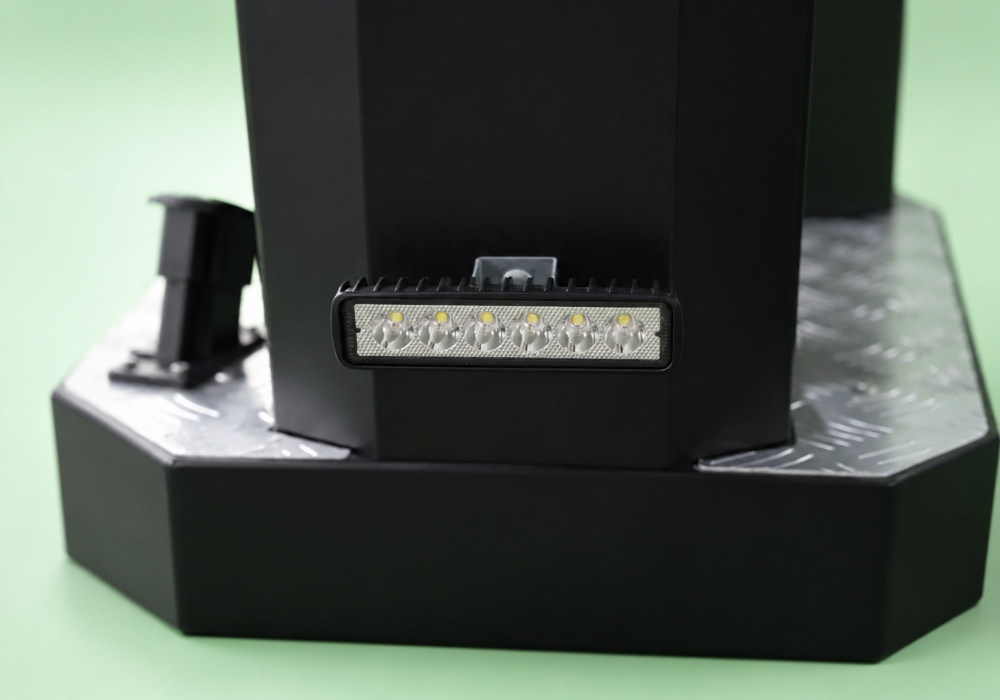
Facility collisions usually occur in dimly lit loading bays, necessitating 24-volt LED headlights that project 1,500 lumens across a 15-meter forward field of view.
Forward illumination fields allow operators to spot protruding inventory or floor obstructions from 10 meters away, stopping the machine within its 1.2-meter braking distance.